Handicrafts
Goa (Sun, Sand, Sea....)
Indian craftsmen believed that they descended from creative godhead " Vishvakarma" the architect of the Gods described as the Lord of All Arts, Carpenter of the Gods, Fashioner of all Ornaments, a great and universal God. Goans in the particulars have a peculiar genius to absorb and assimilate the foreign elements. The original and traditional crafts of Goa are:
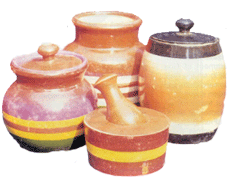
Pottery & Terra-cotta
The Kumars worked on the clay that was shaped on a car wheel and baked in oven; the object thus produced had practical use in daily life. Water cooler called "Gurguleta"' had water pouring out of the beak. Round bottom small mouthed rice cooking pots are called "Budkule", "Kudnim" with wider mouth stirring are used for making curry and cooking vegetables on firewood. "Tovo" was gently shaped for frying fish, roasting 'chappatis' the local unleavened bread or cooking rice pancakes called "sullodeo". The alcohol Feni is made in large terra-cotta stills. 'Donn' a vase like container is used to store paddy and rice. Roof titles "Nodde" are used for roofing. In last twenty five years the artisans have the knowledge and experience to make moulded sculptures, decorative vases, floor and claddings titles besides murals. Bicholim is the centre for artistic pottery. Famous artist "Zilu Harmalkar" has his workshop in the industrial estate. As the pottery & terra-cotta are traditional crafts with utility-cum-decorative items produced by the potters with artistic perfection and realistic finish. The items produced include flower garden pots, bowls with floral designs, figures of saints, Gods' and Goddesses' and animals, ashtrays and pen holders. etc.
Brass metal ware craft
while utensils of utility are made of sheet metal (copper), brass metal casting is a craft passed on from one generation to another practiced on hereditary basis. The items produced include oil lamps in various designs, candle stands, temple towers, church bells, ashtrays, etc.
Bamboo Craft
 Bamboos when cut and stripped can be woven into various type of baskets and mats. These can be used for carrying head load of coconut, rice, paddy, fish, flower baskets and letter-holders, pen stands, fans and other decorative items. along the Goa's beaches, restaurant shacks have sprung up in style of huts of fishermen or agriculturists of yesteryears where mattings and weavings is essential. Bamboos when cut and stripped can be woven into various type of baskets and mats. These can be used for carrying head load of coconut, rice, paddy, fish, flower baskets and letter-holders, pen stands, fans and other decorative items. along the Goa's beaches, restaurant shacks have sprung up in style of huts of fishermen or agriculturists of yesteryears where mattings and weavings is essential.
Wooden laquerware/Wood turning
The items produced are cradels, babycarts, toys, corner stands, etc.
Crochet & Embroidery
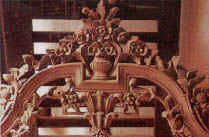 Works such as table cloths, children and ladies garments, pillow and cushion covers, linen, etc.
Coir Products
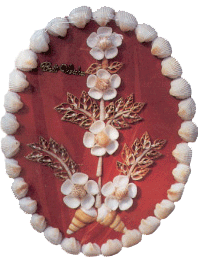 The Coir generated on husking the abundant coconuts grown locally is used in making rope. 'Morjim' a sea-side village in Pernem has a number of families who are thus occupied. Rope of all sizes is made and used for drawing water from well, plucking mangoes, tying together planks of woods in the construction of traditional fishing craft. Thin rope woven with midribs of coconut leaves and bound together make rather efficient broom. As an matter of facts coconuts mask carving is done on coconut shells.
Jewellery
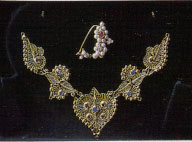 The Goldsmiths or Shetties worked on silver and gold. They created new alloys for use in making jewellery with precious and semi-precious stones. The famous "marquesites" sets used by Christian women for weddings, earrings, rings, green malachite chains called "foddo" are still in fashion. Gold filigree necklaces were famous fifty years ago, as were flower shaped gold garlands for decorating shaped hair. Jewellery used by Hindu women is much more intricate and ornate, there is less use of precious and semi-precious stones. Instead black beads are worked into chains and gifted by the bridegroom to his bride as a symbol of marriage. When gold was used as currency, its jewellery was consider to be an investment. The important of the metal diminished in modern times as new of buildings up assets appeared along with government regulation that put a ceiling on the amount of gold that each women could possess.
|