 The Kanha National Park, in Madhya
Pradesh, forms the core of the Kanha Tiger Reserve created in 1974, under
Project Tiger. Stretching over 940sq km, the vegetation, chiefly made of
sal and bamboo forests, grasslands and streams, this park is the sole
habitat of the rare hardground barasingha. The Kanha National Park, in Madhya
Pradesh, forms the core of the Kanha Tiger Reserve created in 1974, under
Project Tiger. Stretching over 940sq km, the vegetation, chiefly made of
sal and bamboo forests, grasslands and streams, this park is the sole
habitat of the rare hardground barasingha.
The forests of the Banjar valley and Halon valley, respectively forming
Kanha's western and eastern halves, had even , at the turn of the century,
been famous for their deer and tiger population.
By a special statute in
1955, Kanha National Park came into being. Since then, a string of
stringent conservation programmes have been launched, for the overall
protection of the park's fauna and flora. It is one of the most
well-maintained National Parks in Asia, and a major attraction for avid
wildlife buffs all over the world. Kanha boasts of about 22 species of mammals. Some of the inhabitants of
this park are the gaur, the largest of the world's cattle; the sambar, the
largest Indian deer; and the chausingha, the only four-horned antelopein
the world. Other frequent visitors include the Nilgai antelope, the sloth
bear, the dhole, or Indian wild dog, and an occasional panther. Some 200
species of birds inhabit the park, that include the cattle egret,
blackibis, hawk eagle, and the red-wattled lapwing. Shravantal is an old,
earthen bound tank in the central Kanha meadows, which happens to be an
important watering hole, for a large number of water fowl in winter. Bamni
Dadar, known as Sunset Point, is the most beautiful section of the park,
and the view ofthe sunset from this spot is absolutely mesmerising. Quite
a few animals can be sighted around this area which include the sambar,
gaur, the four-horned antelope and the barking deer.
The barasingha is undoubtedly, the jewel of
Kanha, and drastic steps
have been taken to rescue it from complete extinction. The enlargement of
the grasslands, through village reallocation, has been responsible for
this impressive achievement. Barasinghas exist almost totally on grass,
and tall grass meadows are essential for their security.
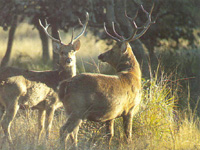 At the height of
winter, between December and January, falls the rutting season of these
animals, and huge groups can be easily spotted in the Kanha and Sonph
meadows. A small, but significant number of blackbucks also inhabit the
central Kanha meadow. At the height of
winter, between December and January, falls the rutting season of these
animals, and huge groups can be easily spotted in the Kanha and Sonph
meadows. A small, but significant number of blackbucks also inhabit the
central Kanha meadow.
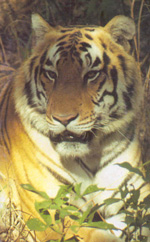
But for all the astonishing diversity in its wildlife population, Kanha
is best known as the habitat of the tiger. Sighting and photographing this
magnificent animal from elephant back, is an unforgettable experience.
M P S T D C jeeps are available on hire for touring the park. For
tiger-tracking, elephants are used. Forest Department guides accompany
visitors around the park on circuits, which enable the latter to view a
good cross-section of the abundant wildlife.
|


 Best Tours Packages